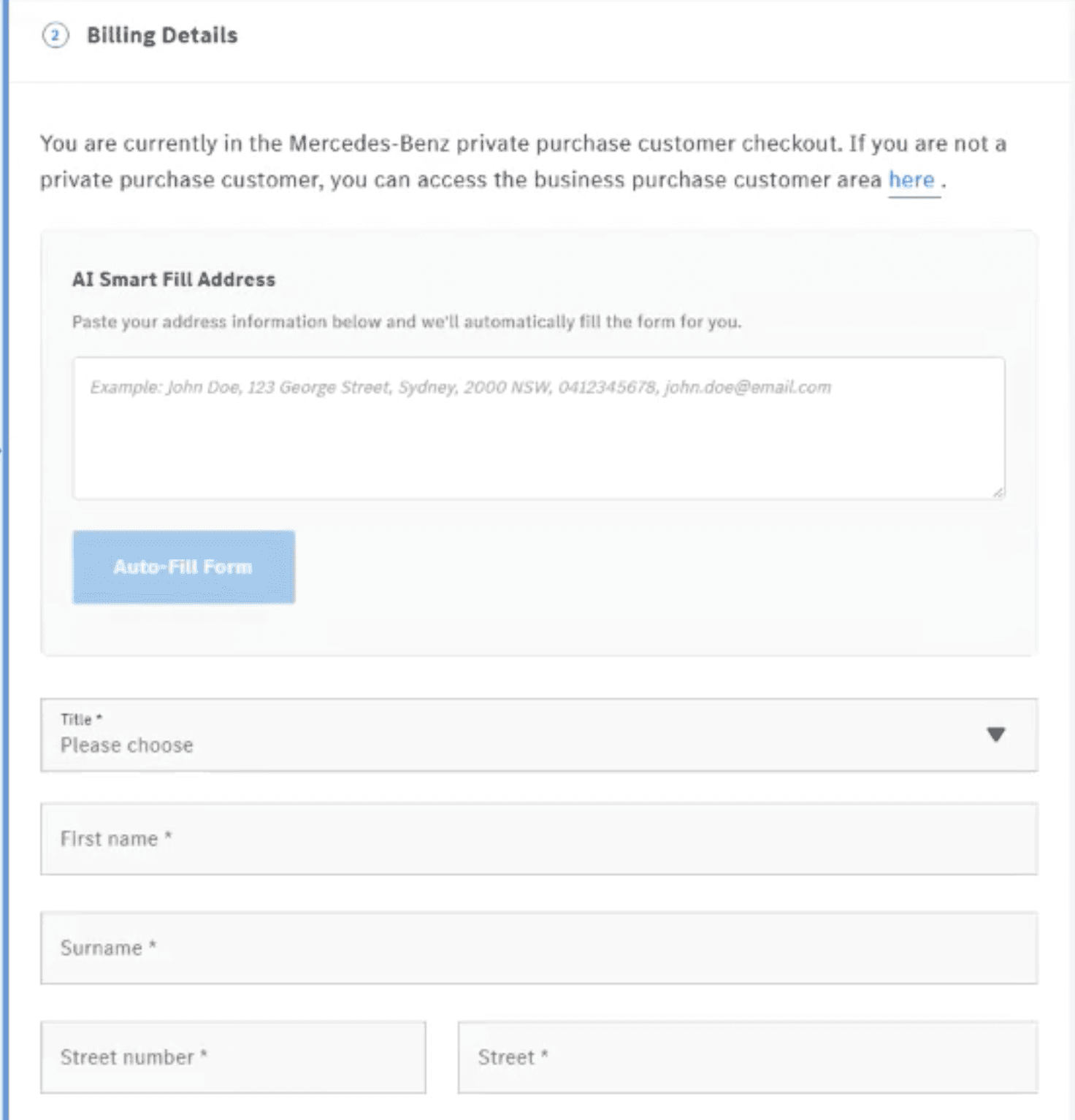
AI-Assisted Personal Data Autofill
Assist non-English speaking users with completing personal data forms during online car reservations
Timeline
2 weeks
Device
Desktop, Mobile, Tablet

Impact
70%
Expected reduction in form completion time
What began as a developer-initiated hackathon project became an opportunity to build trust, strengthen UX credibility, and secure UX involvement in future initiatives.
2
weeks from concept to handoff
The concept was designed in one sprint as a single-market PoC. Meeting this timeline was crucial, as the business goal was to test quickly and collect initial user data.
1
day spent on UX alignment
Within a tight timeline, I used AI tools to create a user flow and wireframes in one day, enabling rapid alignment with the design team.
Problem
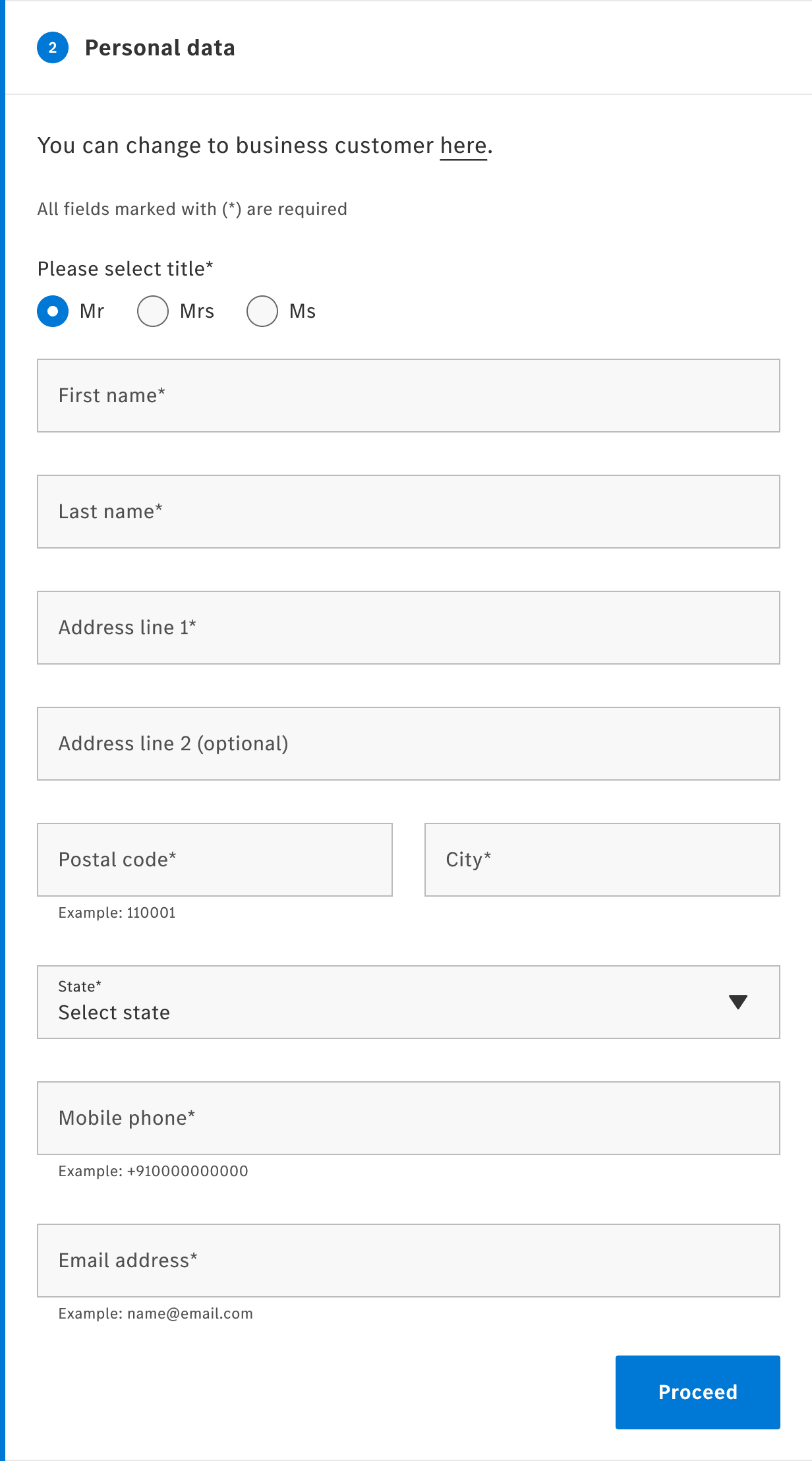
Non-English-speaking users had to manually translate their addresses into English when completing the car reservation form. This was frustrating and time-consuming, increasing form abandonment and leading to lost revenue.
60% ↓
form abandonment rate
→
Process
Cross-Functional Alignment for a Consistent AI Experience
To ensure consistency in AI-driven elements, I researched similar features across the online car reservation journey. In parallel, we aligned with the Design System team to confirm that tokens met compliance standards.
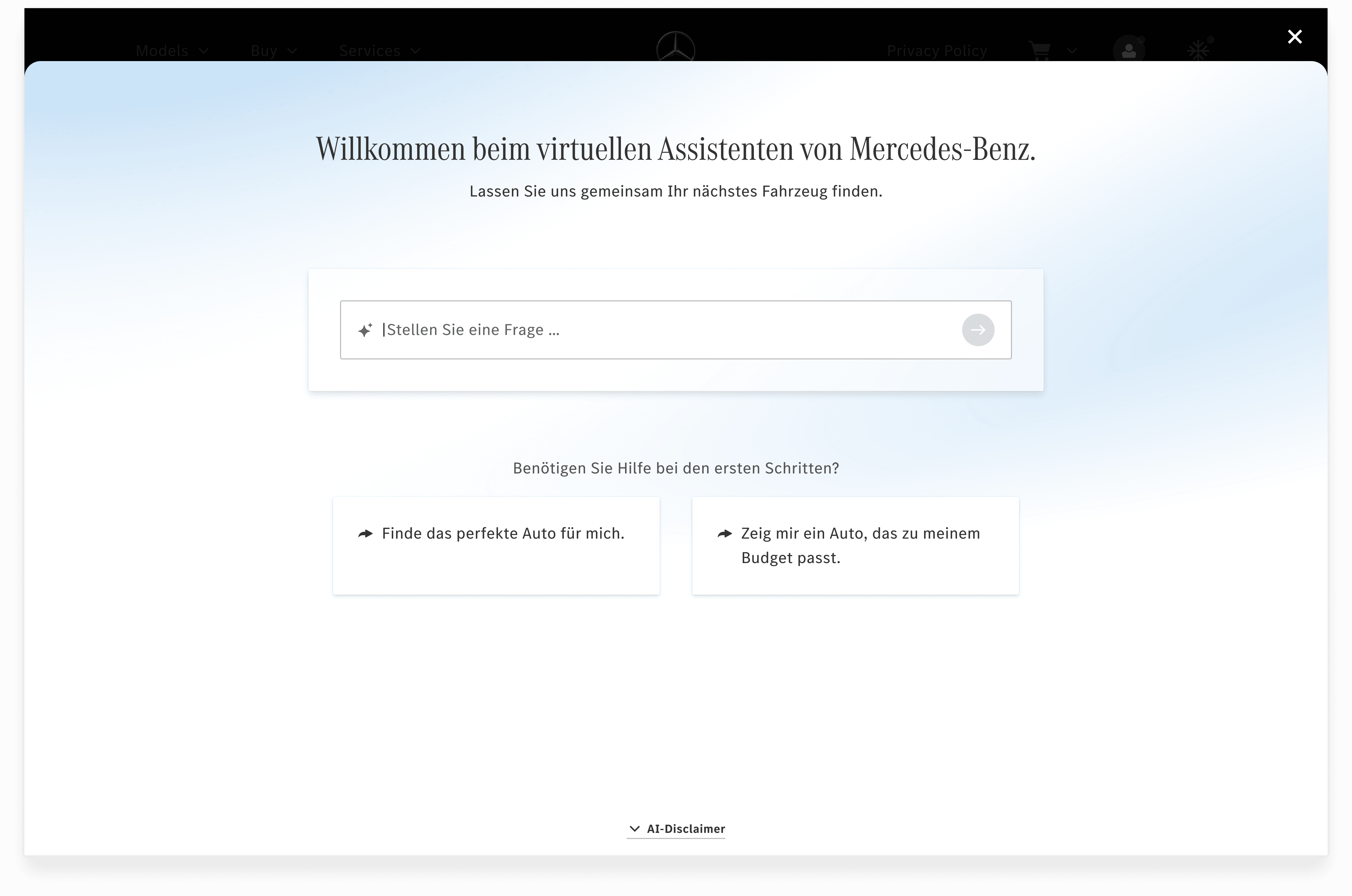
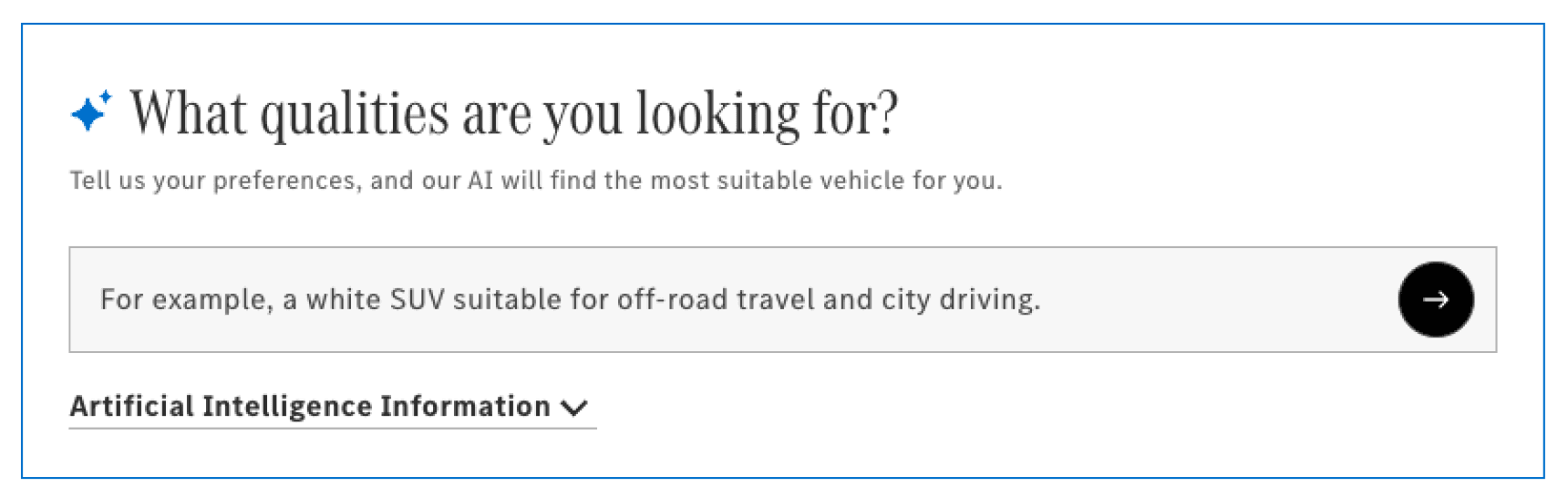

For the Indian-market PoC, making the feature easily discoverable was critical to enable implementation and gather initial usage data.
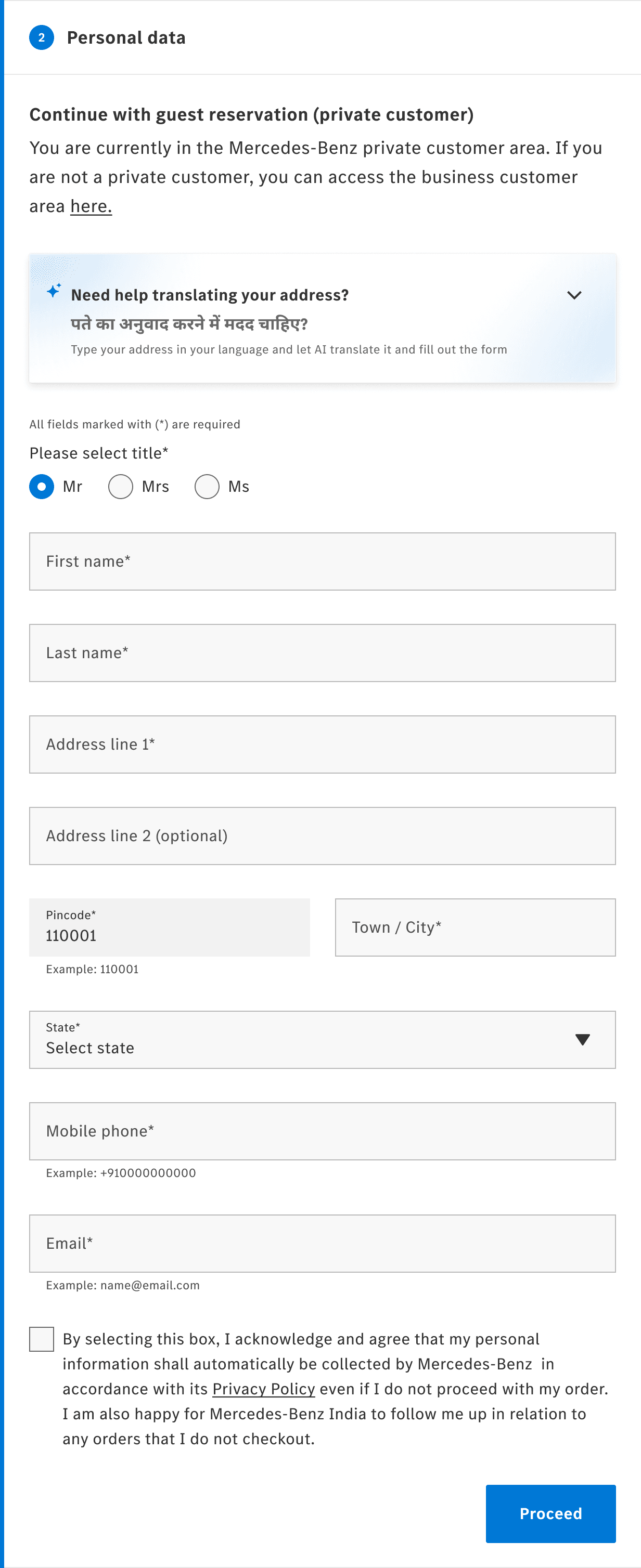
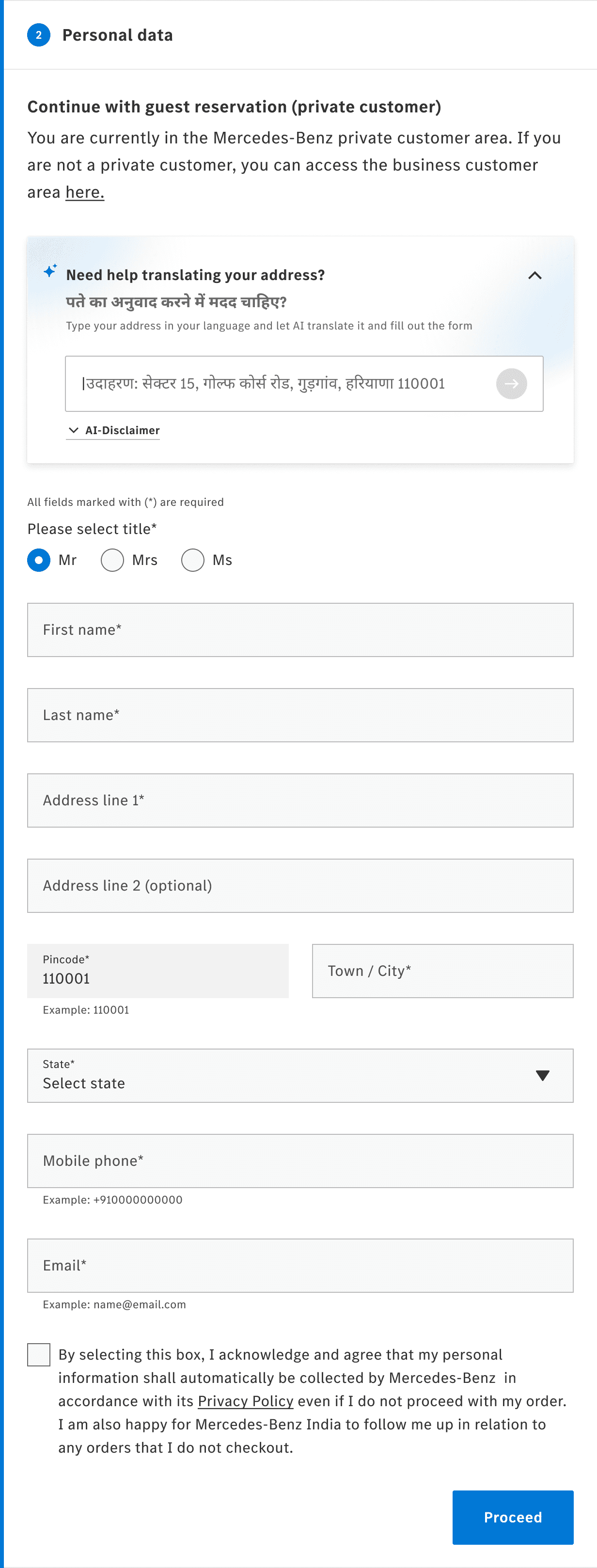
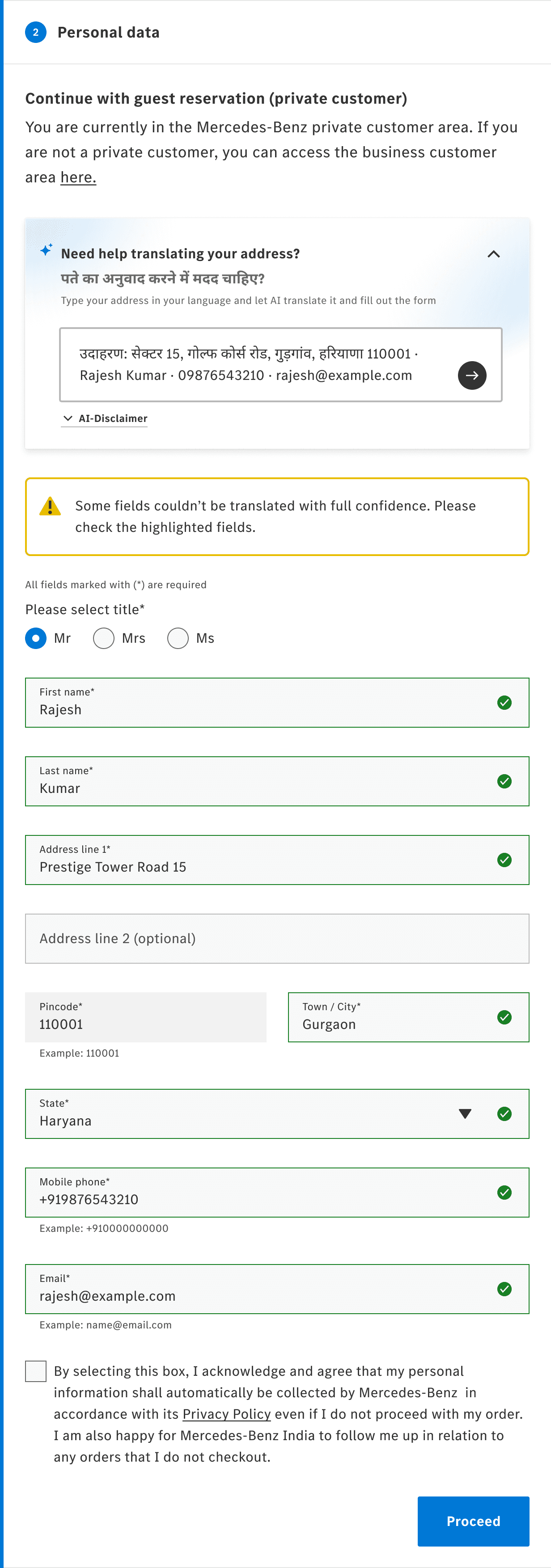
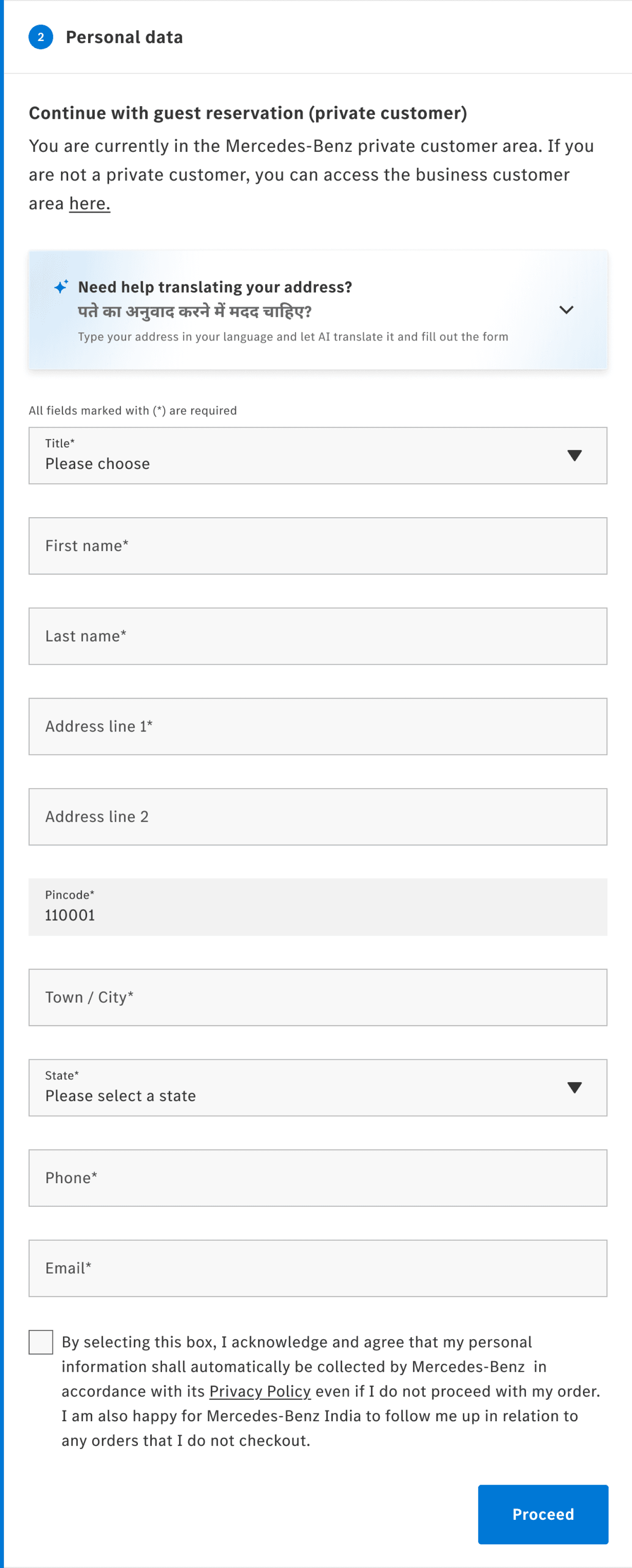
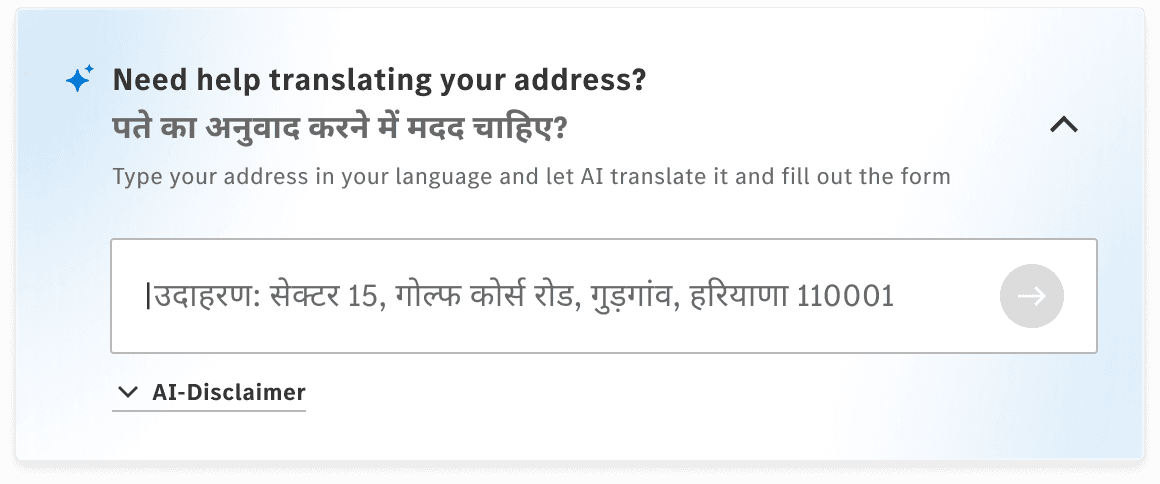
Step-by-step flow within the personal data step
Localized and Mobile-friendly AI translation
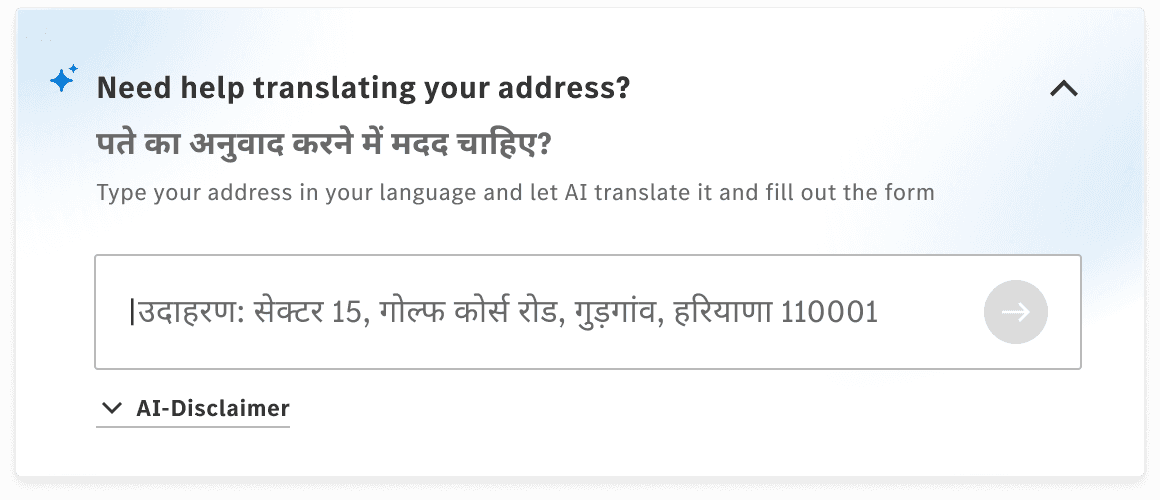
The design helped non-English-speaking Indian users easily discover the feature by presenting key information, such as section headlines and input hints, in Hindi, one of India’s official languages alongside English.
To address limited mobile screen space and already lengthy forms, the section was made optional and collapsed by default to reduce visual clutter. The AI legal disclaimer was placed behind a link so users would not feel overwhelmed.
What began as a developer-initiated hackathon project became an opportunity to build trust, strengthen UX credibility, and secure UX involvement in future initiatives.