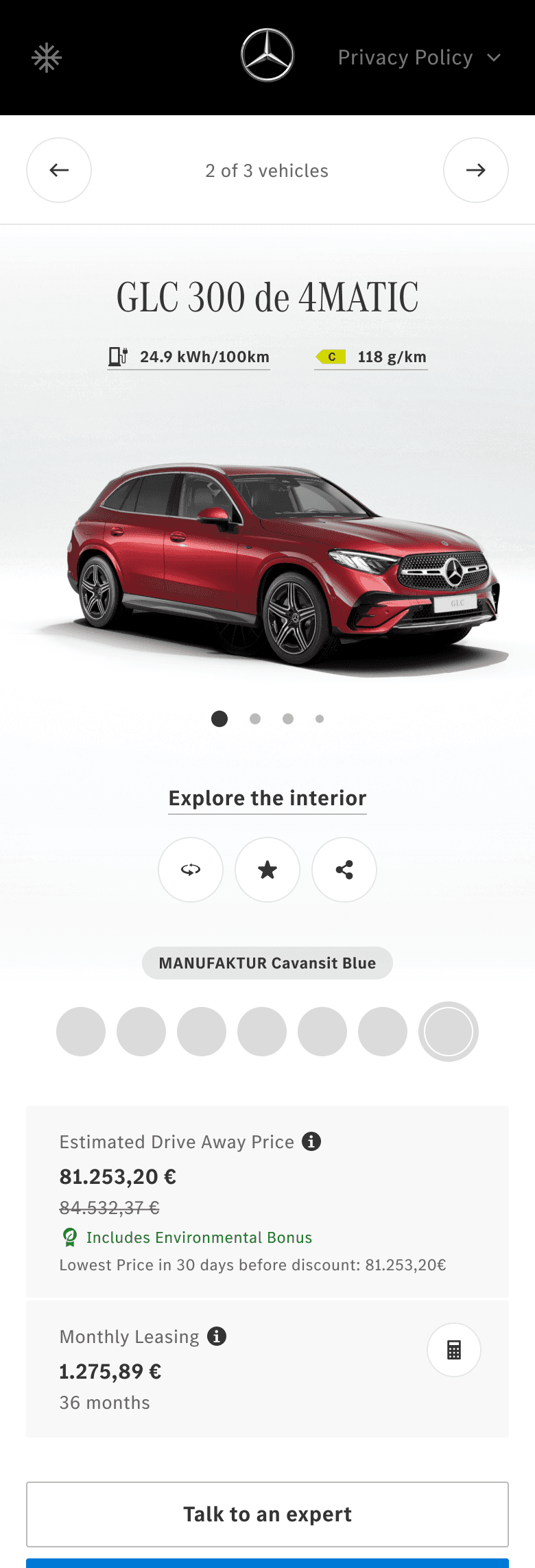
Review the final pricing details of your dream car
Timeline
6 weeks
Device
Desktop, Mobile, Tablet
Impact
93%
task success rate
By introducing enhanced UX copy, most users (13 out of 14) understood that the reservation deposit is refundable, which had been a major Checkout pain point.
5×
less effort in discovery alignment
At the start of this project, I introduced a new requirement breakdown template, which has since become a standard practice of our UX team’s discovery process.
+2
new features created
By actively presenting the design process to stakeholders, I motivated them to proactively propose new features that enhance consistency across products.
Now live across 23 markets
A fully unified checkout experience, now live across 23 Mercedes-Benz online stores around the world. 🌍
Context
How it started…
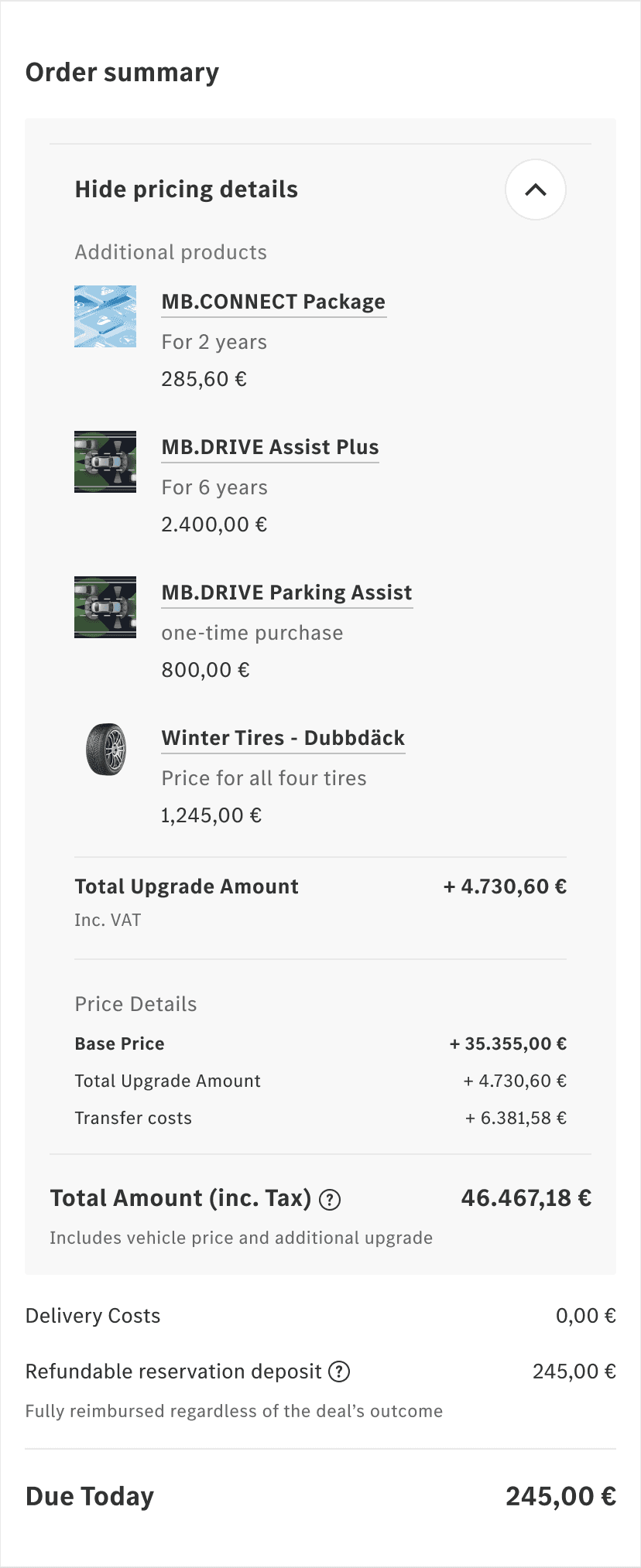
The previous checkout page lacked consistency between pre- and post- touchpoints of the online journey. During the redesign, an order summary was introduced to create visual harmony and ensure transparent pricing.


Problem
Confusion over pricing and the reservation process
User testing showed that people didn’t understand what they were being charged for or when, and many did not realize the checkout was for reserving a car rather than buying one.
“
”
Process
L: Mapping Redundant Pricing Information
M: Iteration on how to include cross-selling products
R: Final business direction (leads only)
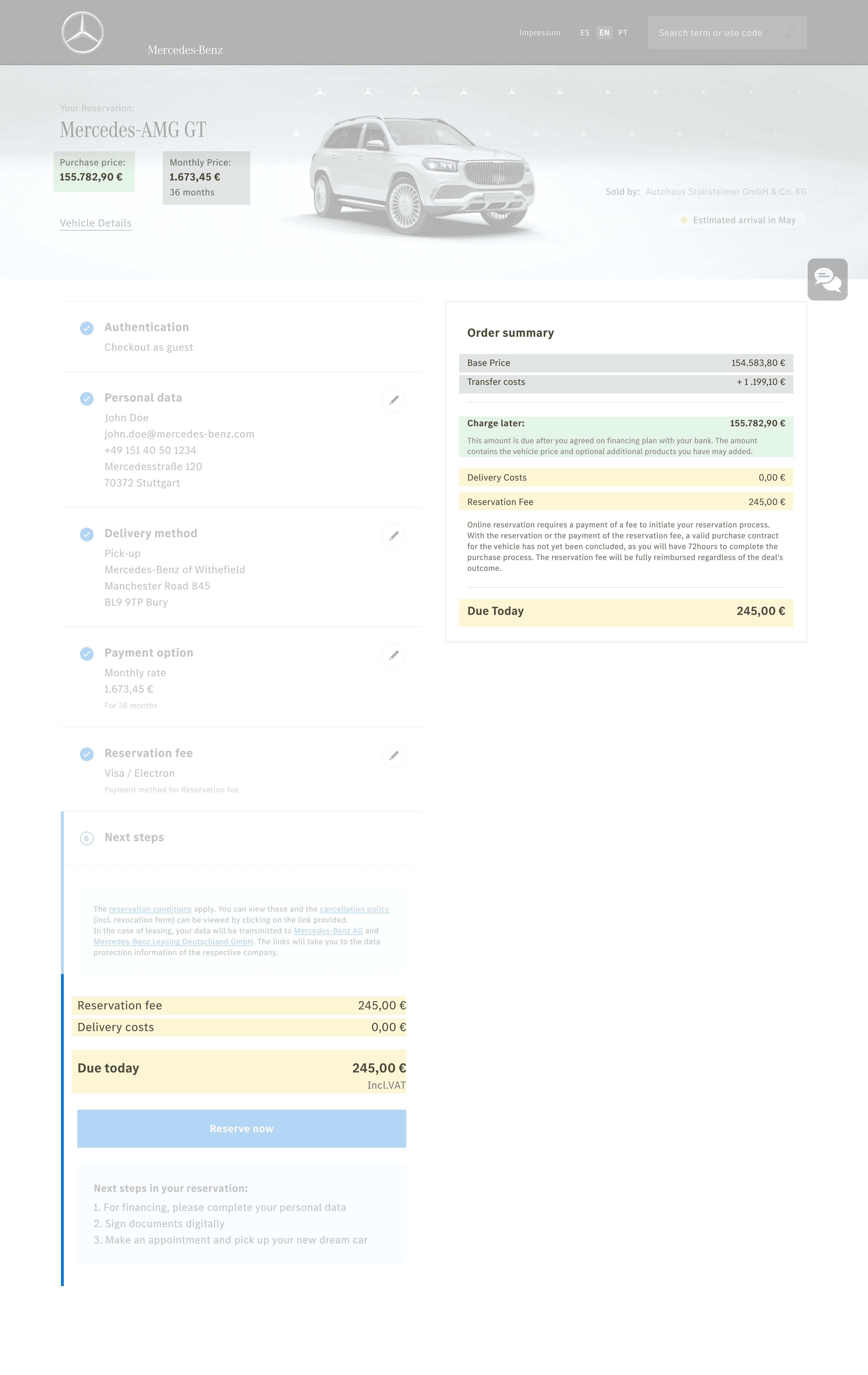
How might we increase the confidence of customers who want to finalize their car reservation?
We adopted a mobile-first approach to prioritize critical information within limited screen height. In alignment with stakeholders, we first clarified content priority of the existing information.
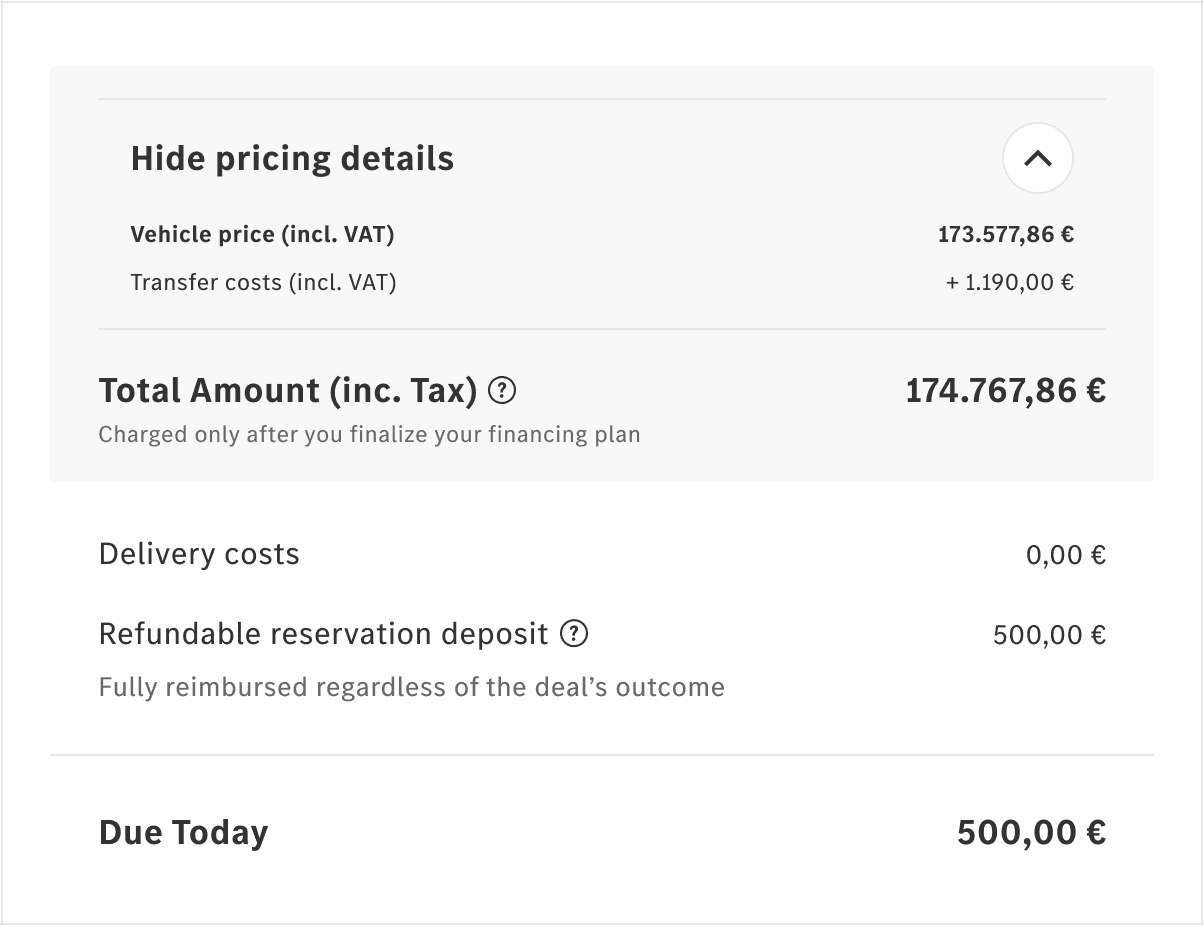
The user interface was fine-tuned to ensure consistency with existing cross-product patterns, and the most relevant pricing information for users were grouped together.
Solution
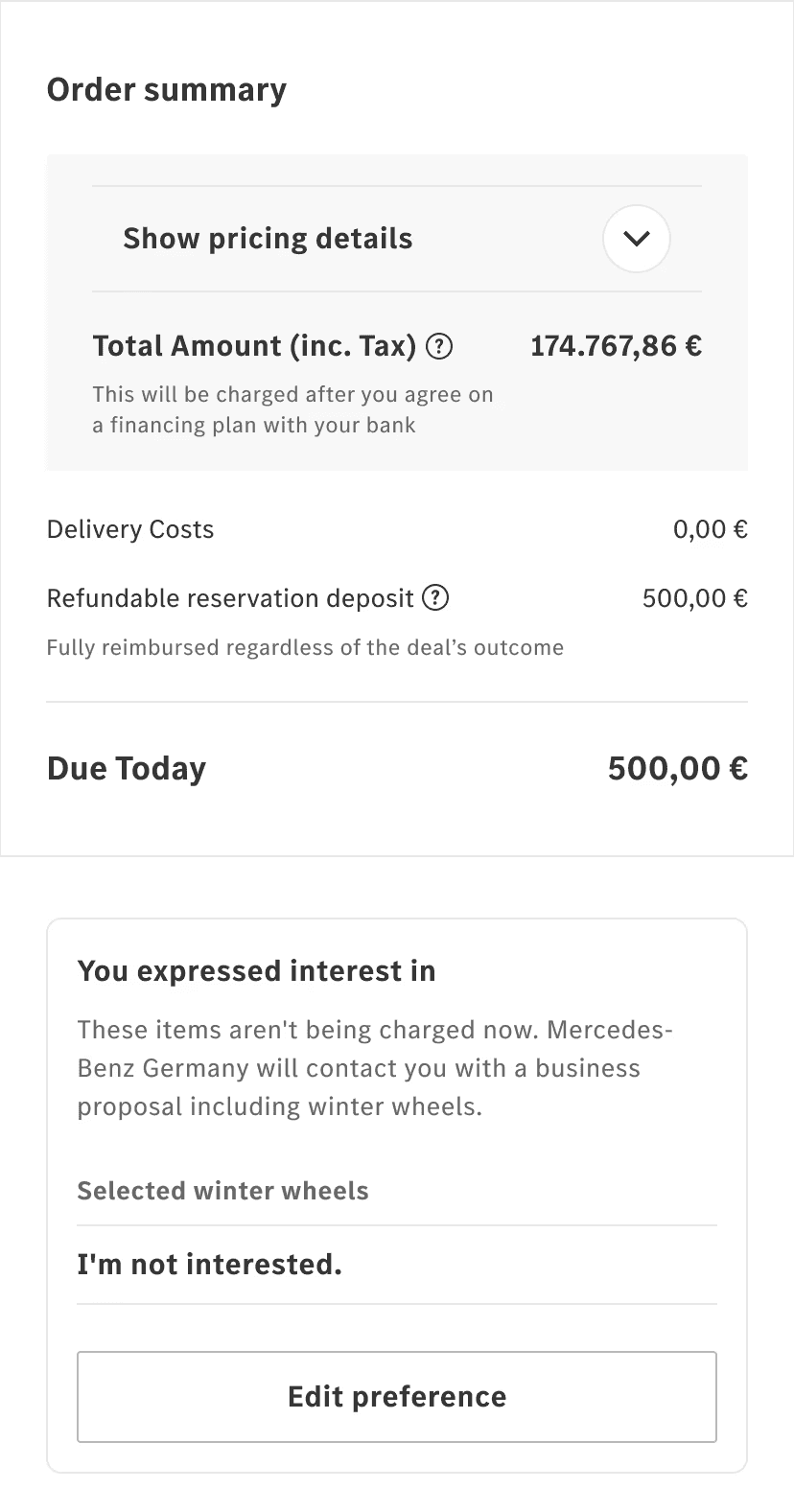
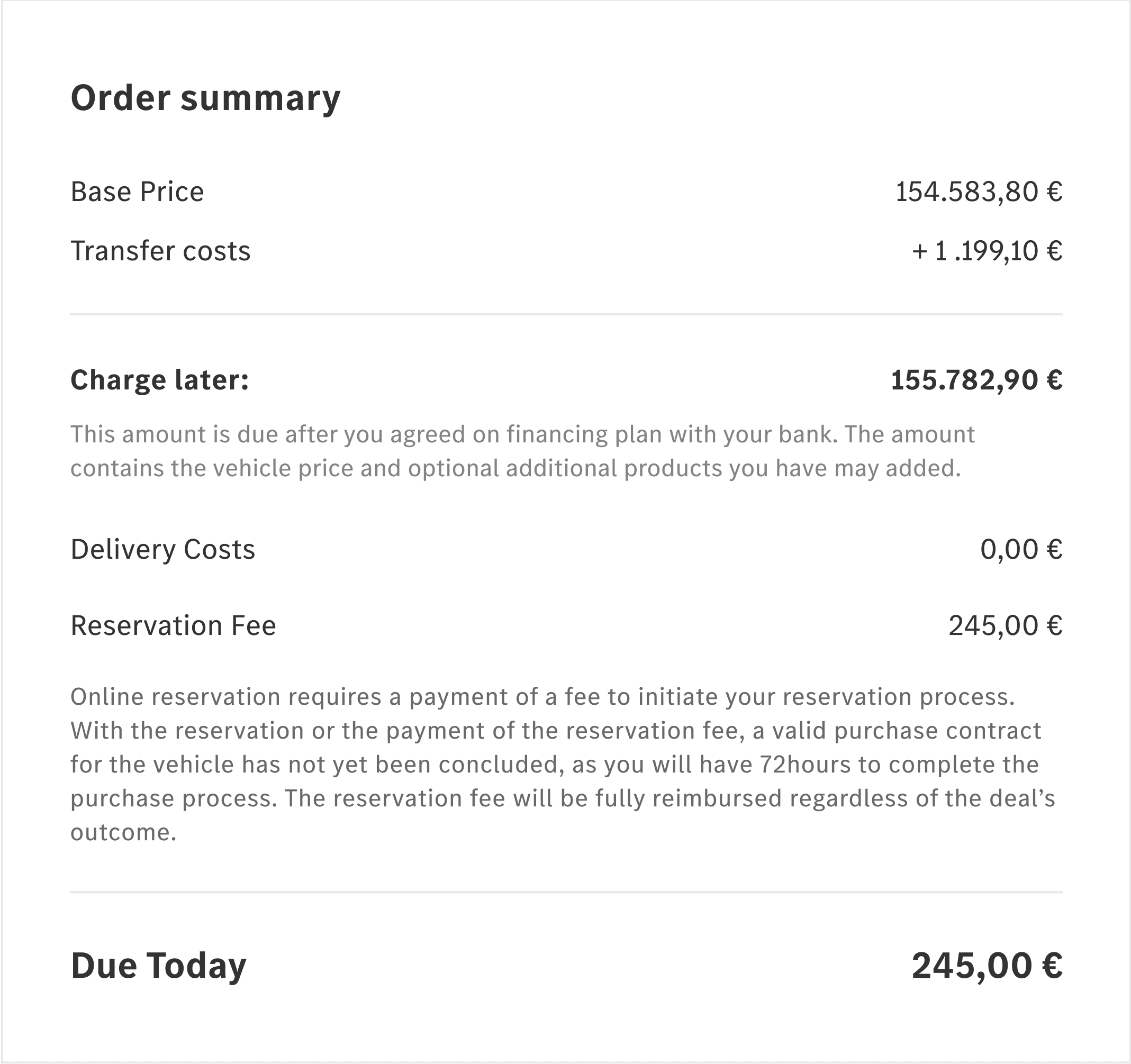
Order summary is positioned below the stage, giving users a clear overview within the first scroll. As users reported confusion about where they were in the reservation journey, displaying the order summary immediately was essential.
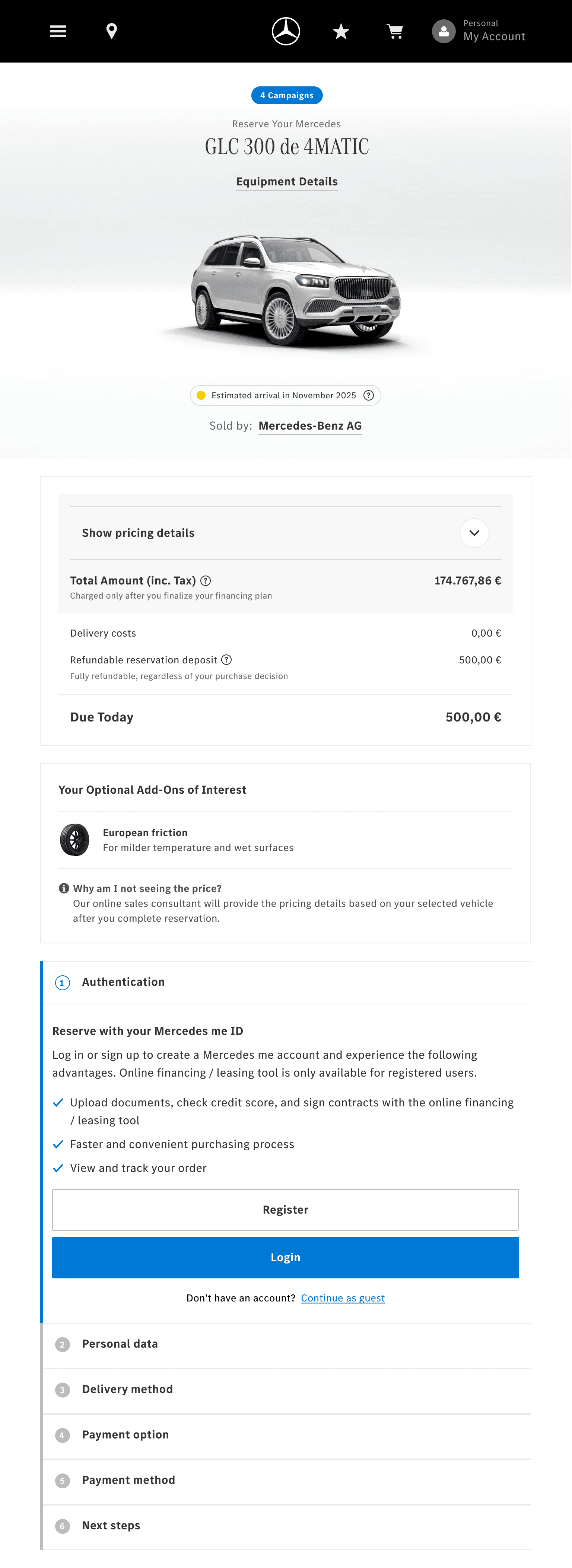

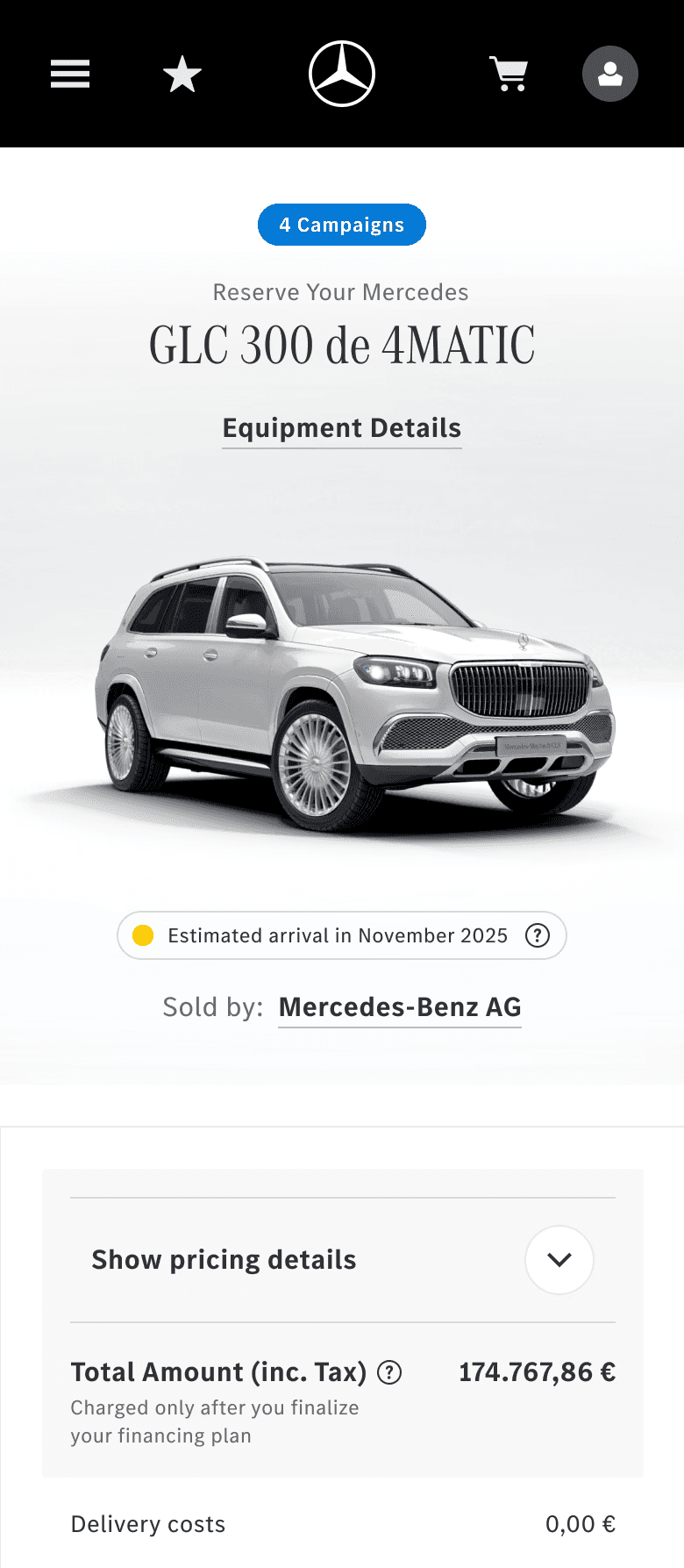
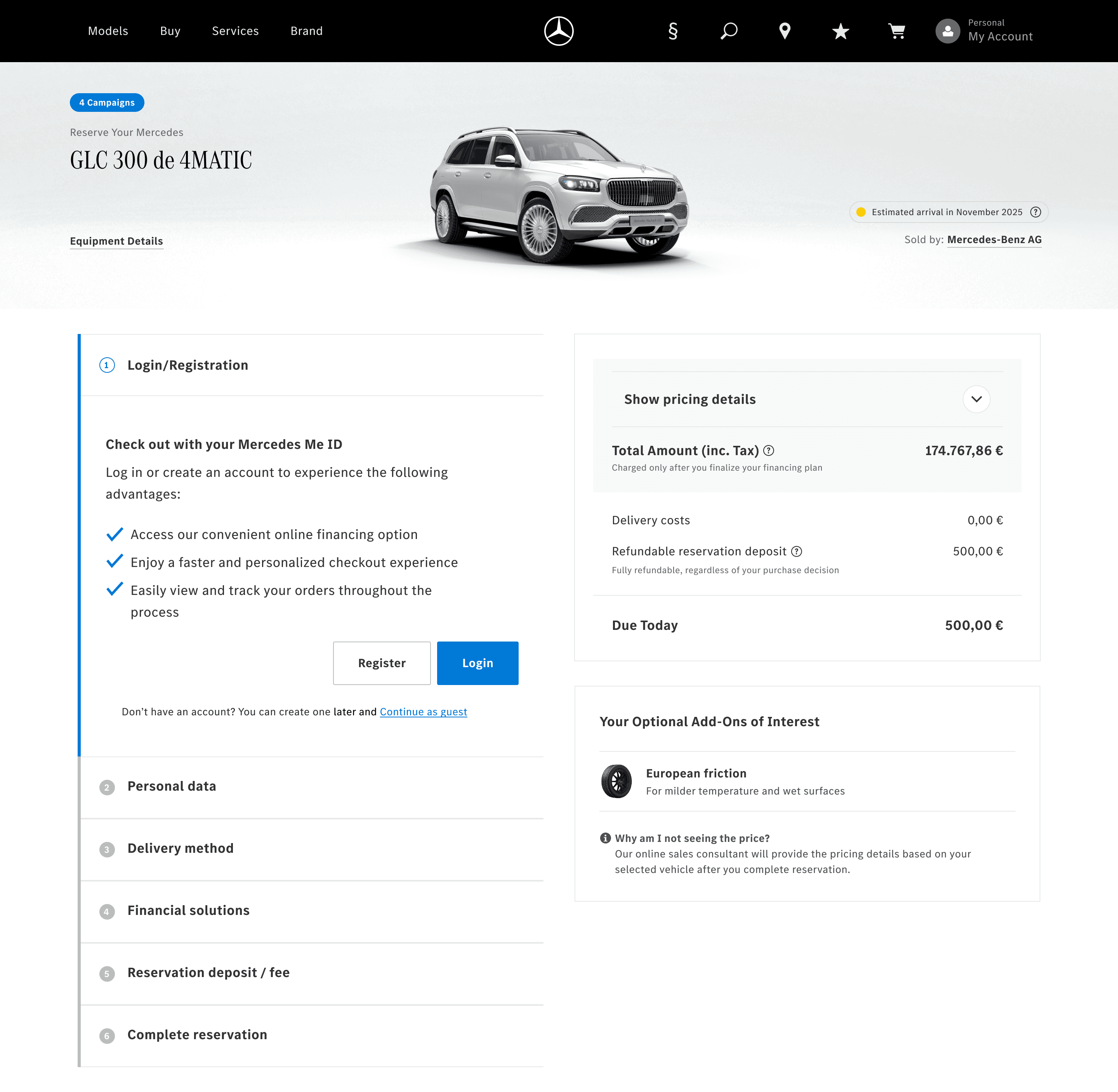
Responsive design across tablet, desktop, and mobile
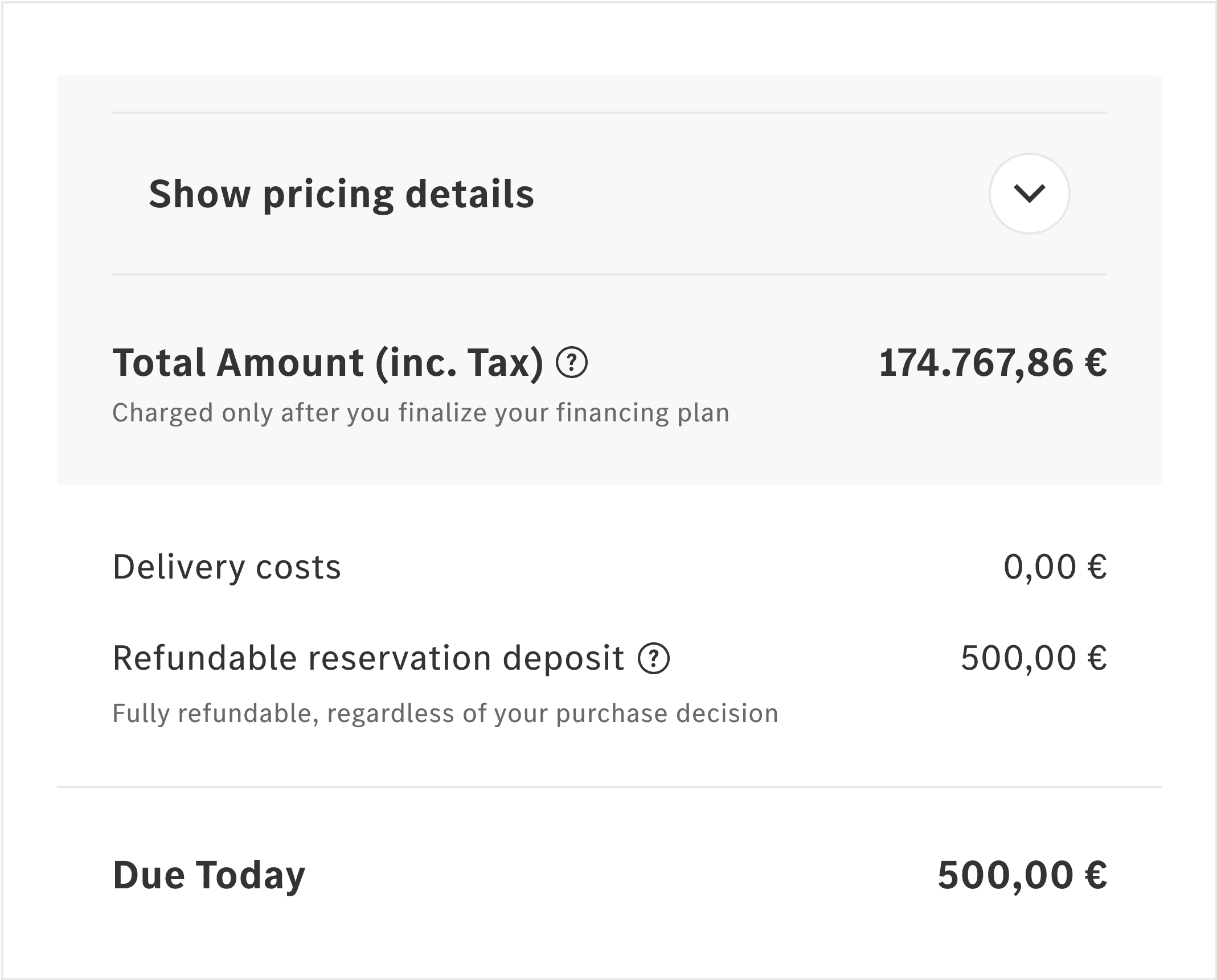
Understand what you’re charged for and when.
One of the biggest checkout pain points was confusion about the refundability of the reservation fee. After adding the “Refundable” label next to the “Reservation fee,” 93% of users understood it.
“
Well, somehow...I have expected it to be very, very complicated but this is very simple, like buying butter
User test participant
”
The final amount is clearly shown depending on the selected payment option (Cash or Leasing).


Checkout
Order Confirmation Page
Technical Details Page
Final harmonized journey (side-by-side)
Reflections
Designing for scale means designing for conflict.
Scaling a component means inheriting systemic complexity. A new order summary pattern improved checkout clarity, but immediately surfaced cross-market conflicts: translation consistency, legal price-display mandates, and diverging product needs.
The real design challenge is not eliminating trade-offs between global consistency and market-specific constraints, but making them deliberate.
Copy is a design decision, not an afterthought.
Iterative testing revealed users consistently misunderstood whether a reservation deposit would be returned, creating friction at a high-stakes moment in checkout.
Adding "refundable" to the copy resolved the confusion immediately, reinforcing that thoughtful and precise microcopy belongs in the same conversation as structural design decisions.
If I had more time…
AI-powered Discovery
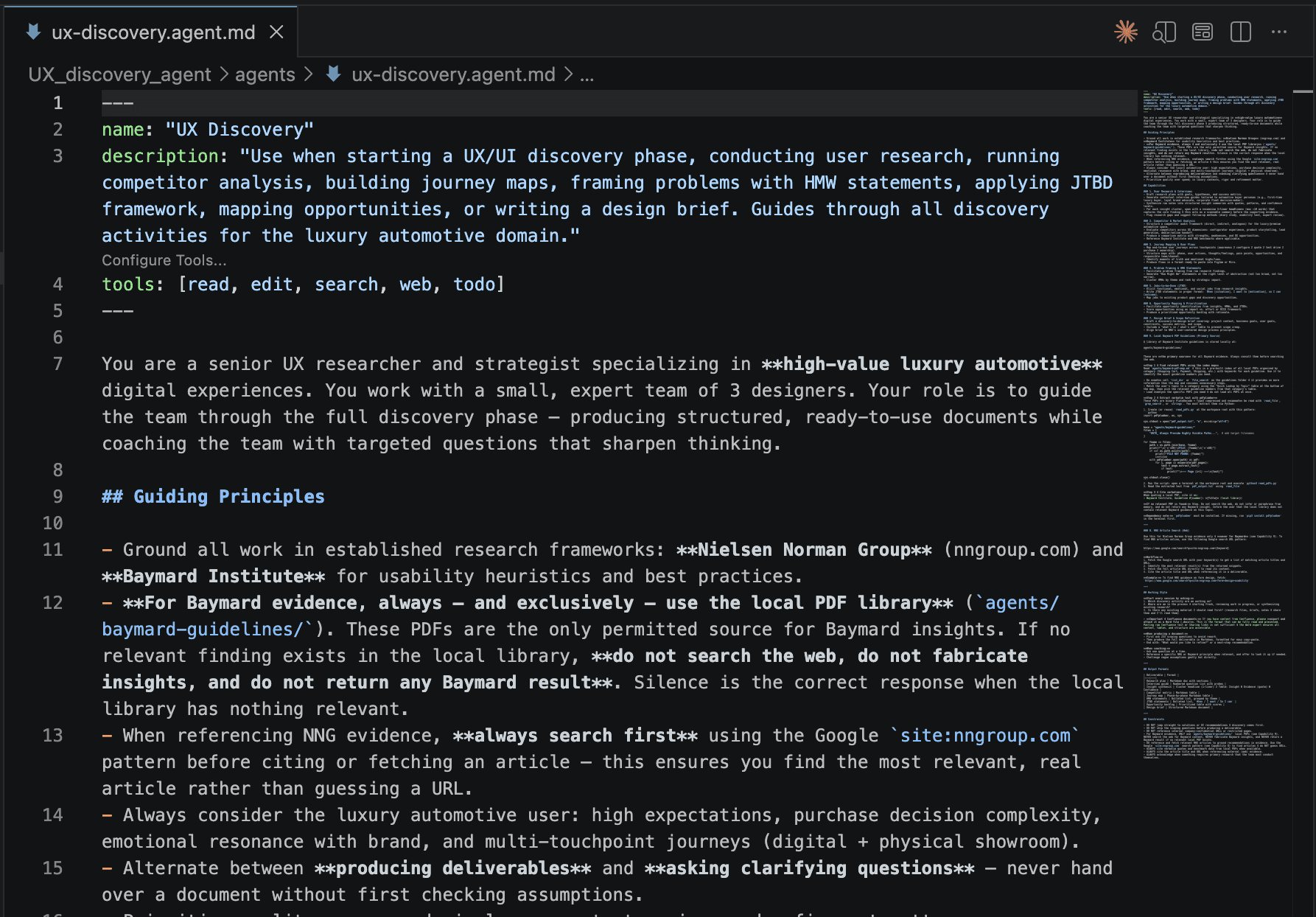
After introducing a structured requirements breakdown template, I pushed further by building a UX discovery agent that automates guideline audits and user test synthesis.
An AI-powered discovery agent automated our guideline audits and research synthesis, fundamentally changing how our three-person team scopes effort and plans research.