Help patients track symptoms and receive timely support
Mobile
Desktop


Impact
100%
task success rate
Achieved 100% Task Success Rate on the results flow (usability testing with 5 course users).
1
UX process added in product discovery
Established User Story Mapping as a standard Discovery practice.
1
time pushback for user-centered feature
Delivered more user-centered iterations, with particular focus on clarity, tone, and emotional safety in results screens.
To Be

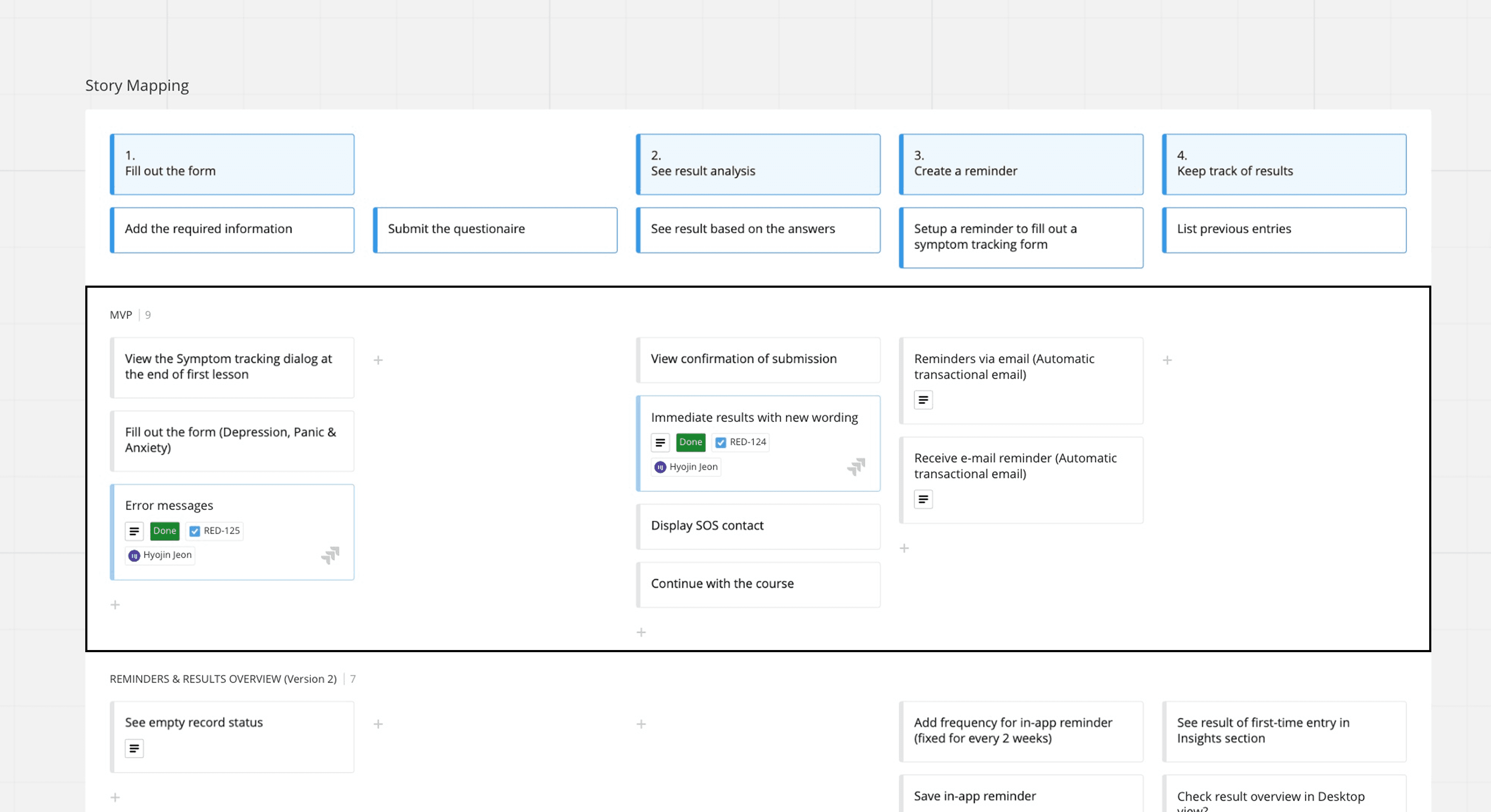
Meanwhile, the product scope was expanding quickly, increasing the risk of unfocused features. The key challenge was to define a clear MVP centered on symptom input, immediate feedback, and continued engagement.
Result based on your progress
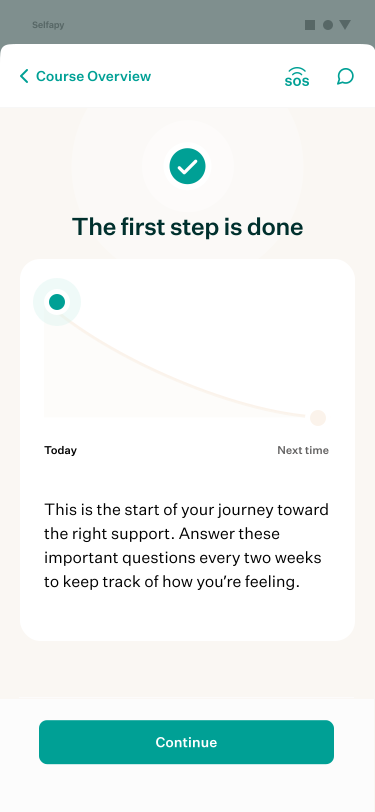
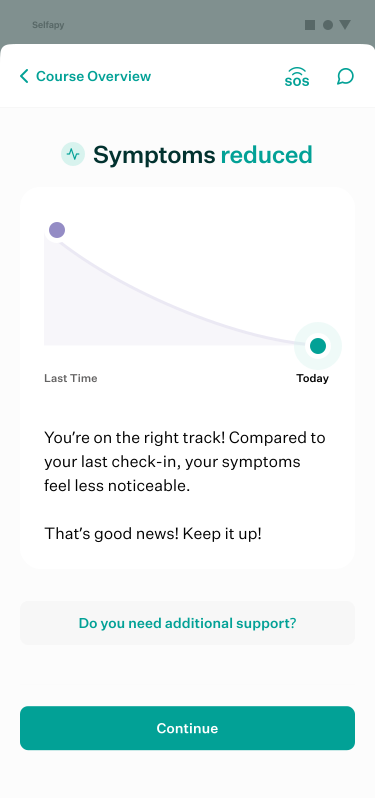
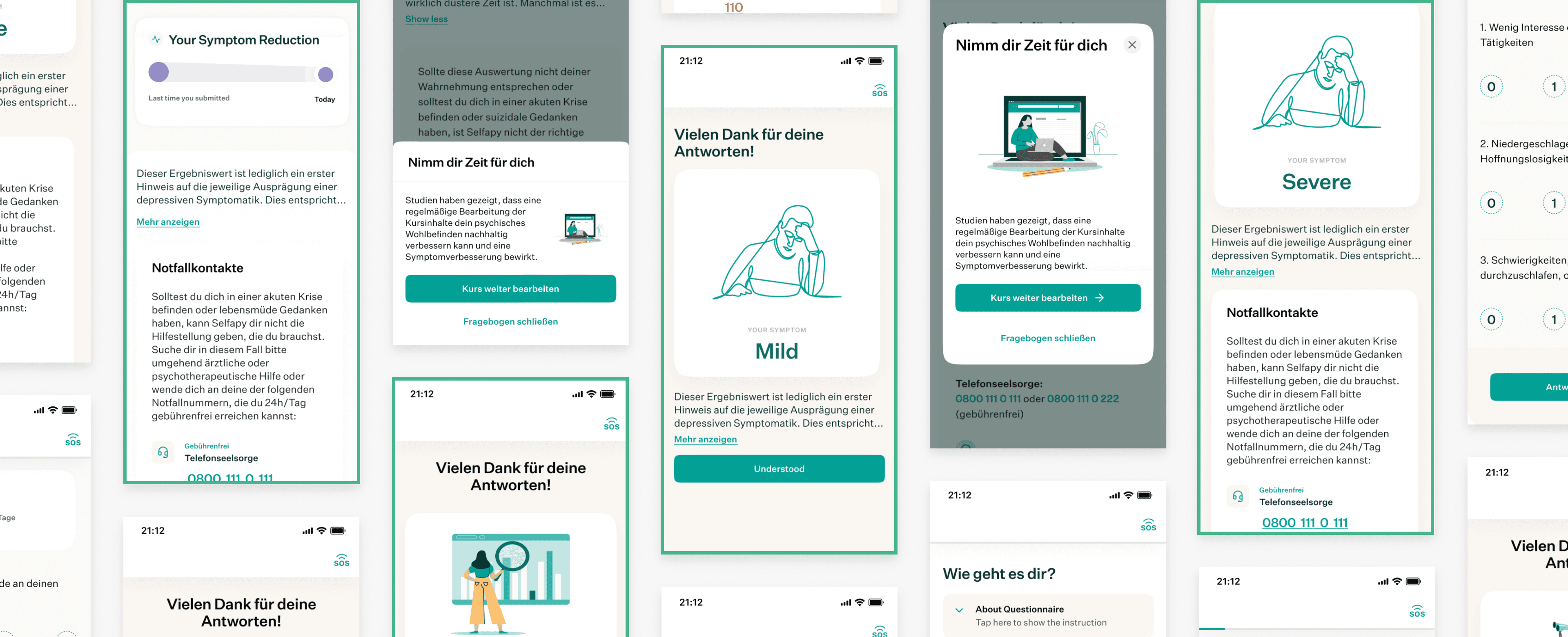
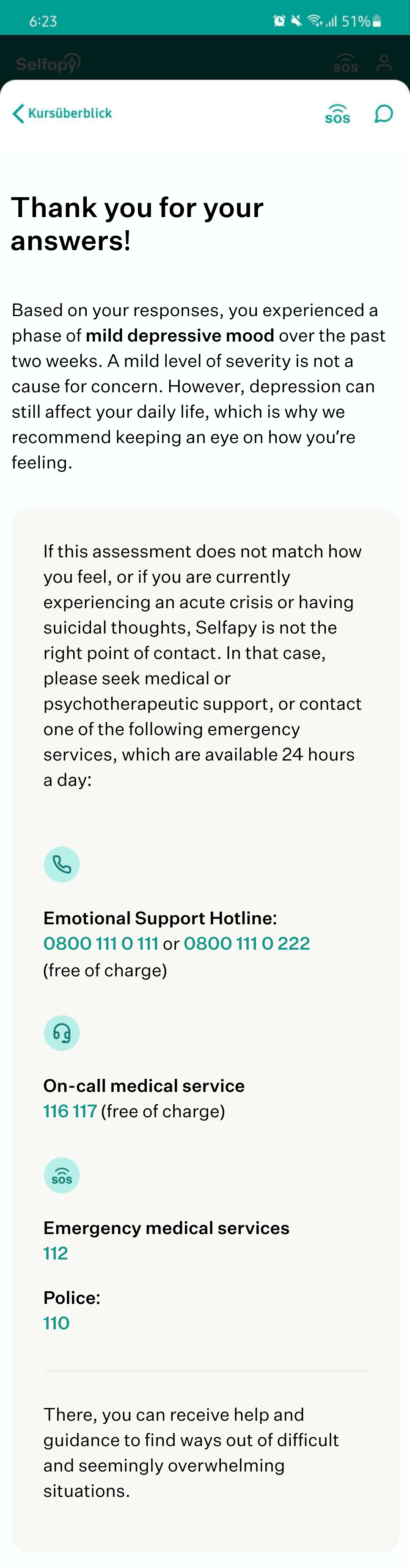
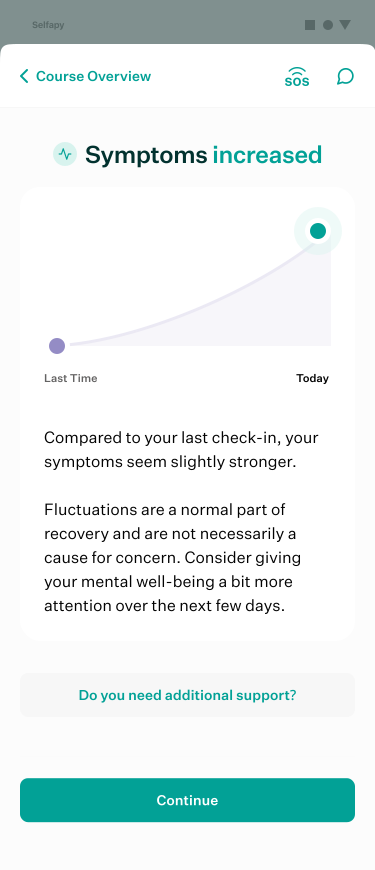
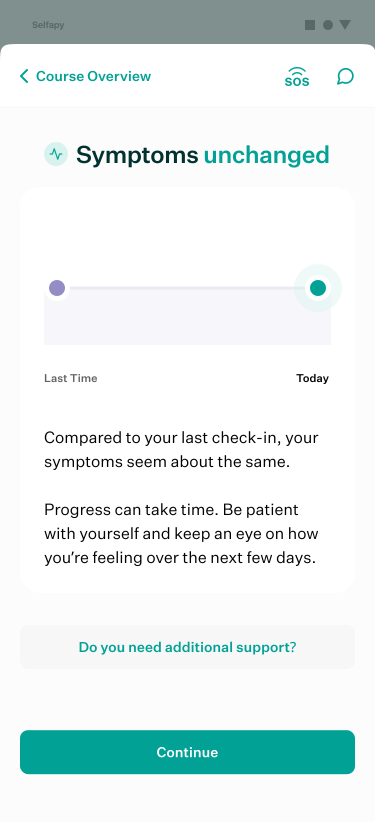
To avoid risk of triggering patients, we opted out displaying direct scores or diagnoses. Collaborating with content writers, we used neutral wordings and designed dynamic result screens tailored to each user’s symptom inputs.
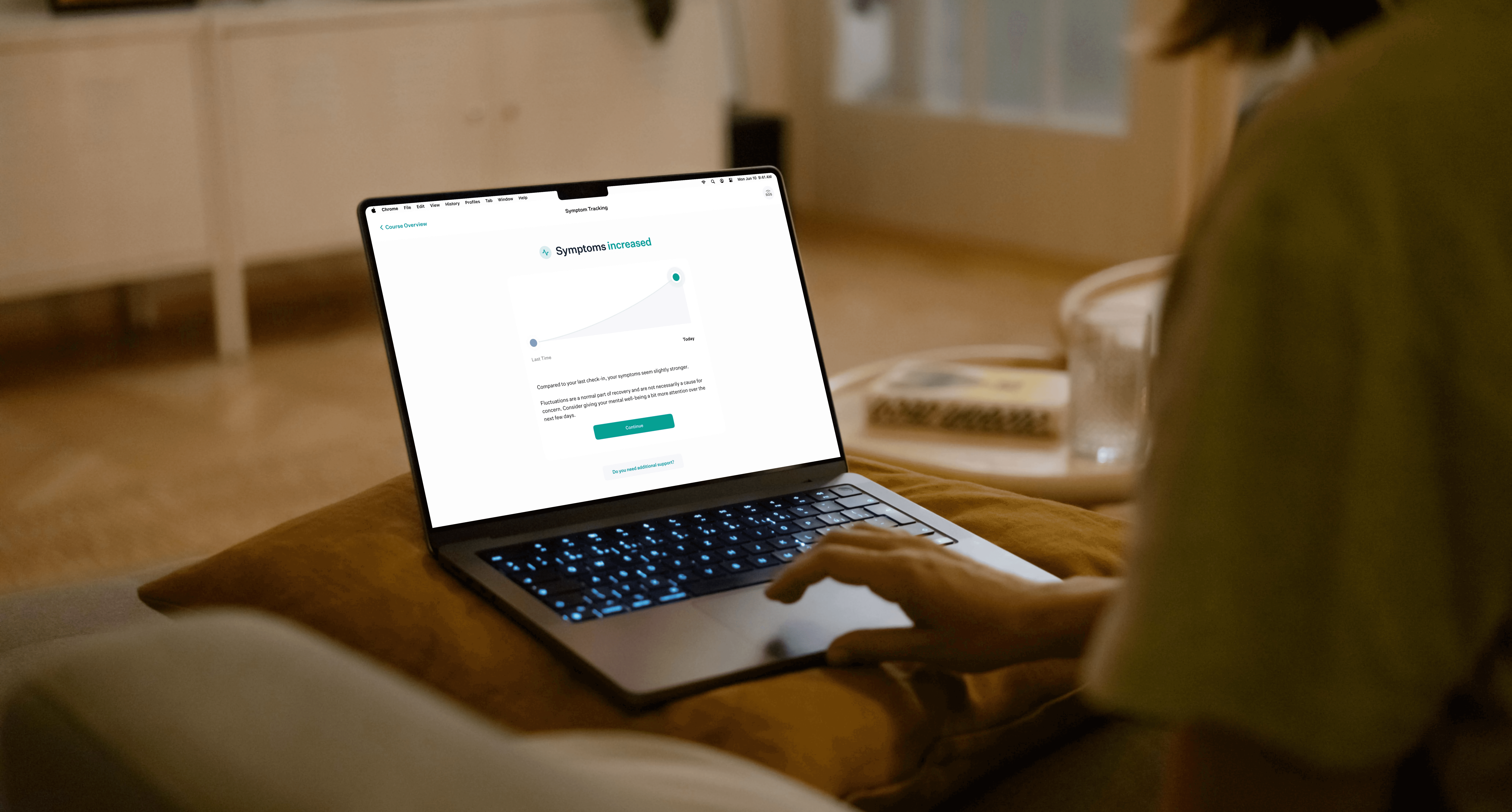
Compared to the original screen, the updated design provides more personalized feedback.
Before
After
Trust-building waiting time
We turned waiting time into a trust-building moment by communicating that users’ data is handled carefully. Transition speeds were optimized across devices for a smooth experience.
We respect and appreciate your time
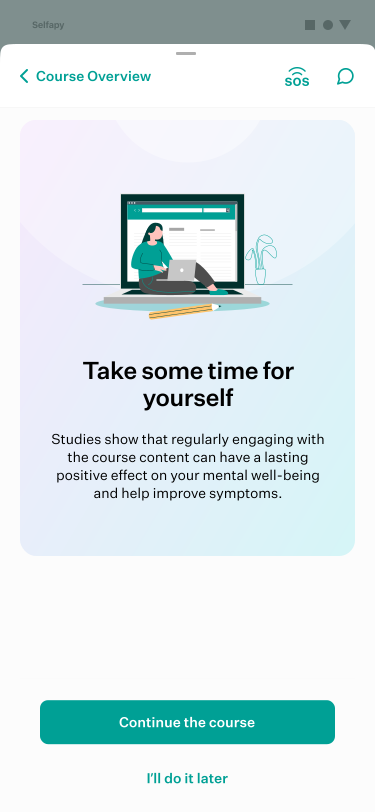
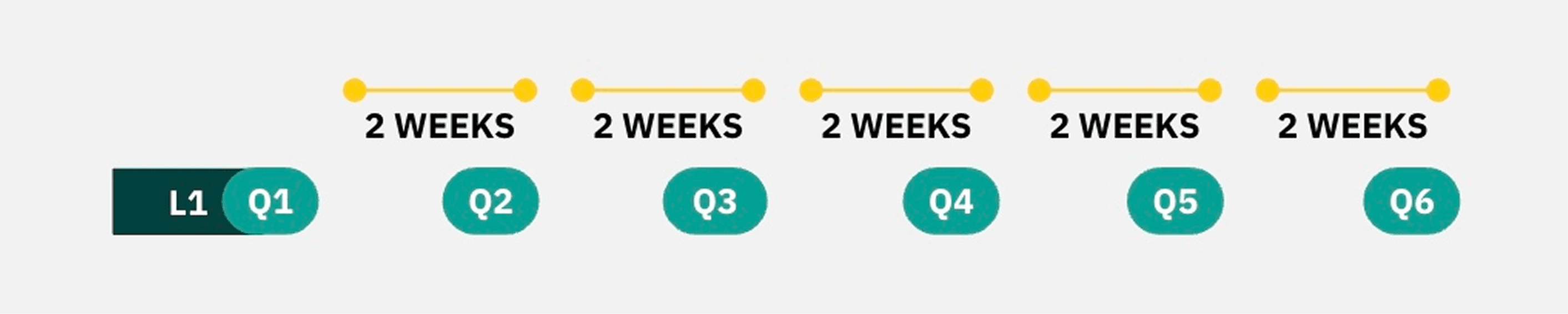
To keep users engaged without annoyance, we considered inactivity patterns like vacations. Collaborating with data analysts, we implemented a time-based approach for reminders. This aimed to increase course continuation while respecting users’ time.